Kevin Bemel ·
How to Revitalize Your Relationship with God
Yom Kippur – The Day of Return
5-1/2 minutes to read
Yom Kippur, celebrated on the 10th of Tishrei, is the final day of the Aseres Y’mai Teshuva – the Ten Days of Return/Repentance that began on Rosh Hashanah. On this day we become like angels, completely spiritual beings, whose only purpose is to serve G-d. We separate ourselves from as much of the physical world as possible.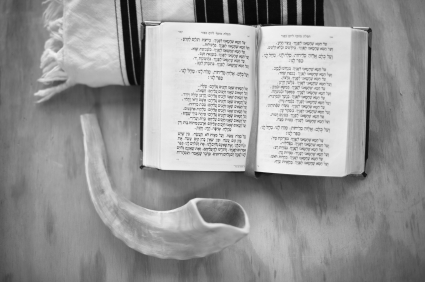
Essence
The Talmud, says, "There were no holidays as joyous for the Jewish people as the 15th of Av and Yom Kippur …"
Yom Kippur seems like a somber time. But consider that it is the day you pray for G-d’s forgiveness and renewal for another year of life. That puts it in a different light.
On Yom Kippur and Tu B’Av (the 15th of Av), young women lent from their best clothes to friends whose garments were not as nice. That way none would get embarrassed by her clothing. Then the young women would gather outside Jerusalem in the vineyards and dance. All the unmarried young men would go out to watch. The concern of men and women mixing was relatively relaxed. The fasts of Yom Kippur and Tisha B’Av (six days before Tu B'Av) focused everyone’s mind on a higher level.
As they danced, the young women would say a verse from Proverbs 31:30, “Young man, lift up your eyes and choose wisely. Don’t look only at physical beauty, look rather at the family, ‘For charm is false, and beauty is vanity. A G-d fearing woman is the one to be praised...’”
Young people focused on finding a marriage partner. What could be more joyous than that?
Practices
Preparation
G-d is your commanding officer. He gave you life. You are responsible to Him for how you use or abuse it. On the High Holidays, He debriefs your fitness report.
During this ten-day conference, work to do three things: 1. Confess your mistakes, 2. Feel regret for them, and 3. Make a resolution to change. The Al Cheit, a recitation of sins, and the V’dui, confession, can help you come to terms with the general categories of your mistakes and the areas of your life in which you fell short. So come prepared with an accounting of your life for the past year. That way you can apply these prayers to your specific situation.
Do your homework. Know your accounting well so you don't get distracted trying to recall the past. Come to terms with how you've hurt yourself. Time spent in silent prayer will allow for introspection. You'll be able to focus on your confession and on feeling regret. Eliminate anything that might distract you from this experience.
Understand the challenges you still face in life. Then your prayers will help you to see your great potential, the kind of life you could lead if you commit to change. Resolve to act in a more G-d-like way. Take the crucial first step toward making the coming year your best one ever.
Now is a good time to review the Yom Kippur machtzor, or prayer book. Prepare for this holiest day of the year like you would for a crucial meeting.
In the early afternoon, eat a festive meal to fortify yourself for the 25 hours of fasting beginning that night.
In final preparation for the fast, eat the Seudah HaMafsekes. This is a light meal of fowl or fish instead of meat. Avoid salty or spicy foods and alcoholic beverages. End it with an egg dipped in ashes. Eat this meal while sitting on a low chair or stool. Thus you taper off your involvement in earth-bound delights.
Inspiration
Hearing these words, Rabbi Levi Yitzchak’s face beamed and the fire of his eyes reignited. Raising his hand grasping the widow’s kvitel and two groschen he cried out, “Father in Heaven! Look! Look what a mother is willing to do for her child! And You? Will it be said that you will do anything less for Your children? Can You look this woman in the eye and refuse to grant Your children a year of life, health, and happiness?”
May your prayers ascend to heaven and move the Creator to seal you in the books of good life, redemption and salvation, sustenance and support, merits and forgiveness, and pardon.
What questions or comments do you have about Yom Kippur?
You can leave a comment on this question or ask another question below ↓
Every year beginning on Simchas Torah, the cycle of reading the Torah, the first five books of the Bible, ends and begins again. Each Sabbath a portion known as a sedra or parsha is read. Its name comes from the first significant word or two with which this weekly reading begins.
Do you have a question about the Old Testament? Ask it here and I will answer it in a future Parsha Nugget!
