Kevin Bemel ·
Why Sometimes G-d’s Love Hurts
Parsha [Passage of Scripture] Nugget [Precious Idea] Shemos – Va’eira 6:2-9:35
Have you ever had one of those weeks or months when it seems even G-d is against you? Me too. I find myself shouting to the heavens, “What do you want from me?” or worse, “Stop!” If only I could realize from the start that a painless life would be greater trouble. Take Parshas Va’eira:
“I will smite with the staff that is in my hand on the water that is in the river [Nile] and it will turn to blood.” “I will smite your border with frogs.” “ . . . strike the dust of the earth and it will be for lice on all the land of Egypt.” (Shemos/Exodus 7:17 and 27, 8:12)
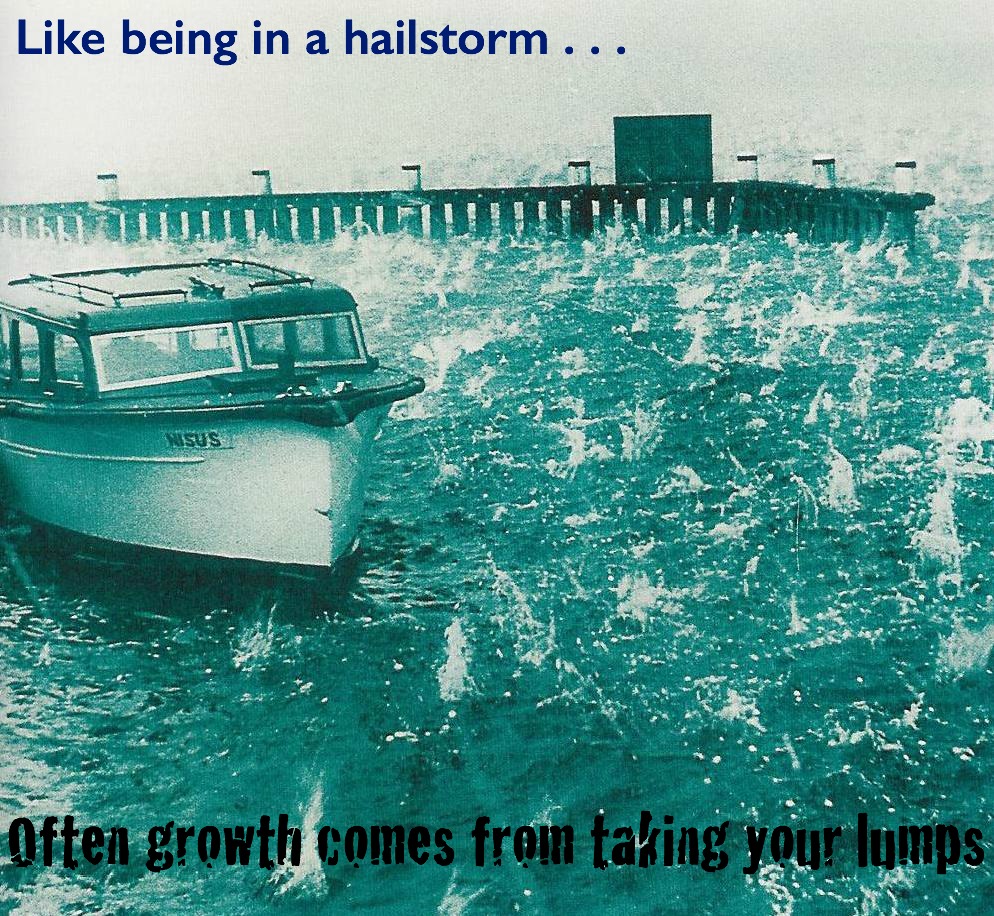
This Sabbath’s parsha begins with G-d reassuring Moses that the covenant made with Abraham, Isaac, and Jacob will be fulfilled. Nonetheless, twice Moses tries to get G-d to release him from leading the Israelites. The rest of the parsha describes the first seven plagues that G-d wrought on Egypt as He brings about the Exodus.
The first nine plagues are grouped in three sets of three plagues:
Water Turning to Blood – Frogs - Lice
Wild Beasts – Epidemic - Boils
Hail – Locusts - Darkness
Rabbi Samson Raphael Hirsch explains that these plagues punished the Egyptians measure for measure for their harsh enslavement of the Children of Israel.
The first plague in each group was designed to make the Egyptians feel insecure, like strangers in their own land. Surely in the Egypt they could get fresh water not blood from the Nile, did not have to worry about being consumed by voracious animals, or have to live with their livestock to prevent it being killed by a hailstorm. The plagues exposed as fallacy that they were entitled to comfortable lives.
Each second plague was calculated to take from them their pride, sense of superiority, and possessions. How arrogant could they feel when frogs infested their food and beds, and when their livestock was destroyed by pestilence and their crops consumed by locusts?
Lastly, the third plague of each set imposed physical suffering on them. Lice, boils, and darkness, so dense they could not move, tortured their bodies and threatened their very existence.
Although the plagues seemed to be punishments, in reality they were G-d’s way of helping the Egyptians correct the error of their ways.
By making them insecure in their own land G-d gave them the opportunity to feel empathy for the Israelites who were strangers in Egypt. By taking away their pride, feeling of superiority, and possessions G-d gave them the opportunity to experience humility and to understand that their greatness was a heavenly gift, one that would be taken away if they abused it.
Finally, G-d imposed suffering to encourage the Egyptians to examine their behavior and figure out where they went astray.
Hopefully you have never experienced anything as horrible as the plagues. Nonetheless, when G-d puts challenges in your life it behooves you to look for the way in which this seeming punishment may actually be a loving nudge in the right direction.
How do you prepare yourself to confront a potentially life altering event?
Every year beginning on Simchas Torah, the cycle of reading the Torah, the first five books of the Bible, ends and begins again. Each Sabbath a portion known as a sedra or parsha is read. Its name comes from the first significant word or two with which this weekly reading begins.
Do you have a question about the Old Testament? Ask it here and I will answer it in a future Parsha Nugget!
