Kevin Bemel ·
Succos – Coming to Terms with Life’s Necessities
Essence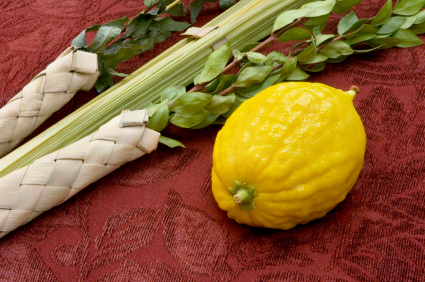
Rosh Hashanah and Yom Kippur focused your spirituality and elevated your self-perception. Hopefully you have repaired your relationship with G-d and re-committed to pursue a life truer to your ideal self.
Succos comes to raise your joy to new heights as you come to terms with life’s true necessities.
To demonstrate a rejuvenated faith in G-d, on Succos we leave our homes and dwell in a sukkah. We eat, study, and sleep in this temporary structure covered with a roof of natural materials through which we see stars. No electricity and no room service.
Is life bearable in such primitive circumstances?
Have you ever asked yourself this important question? Most us of live at an amazing level of affluence compared to the vast majority of people alive today. Former generations could not even dream of such luxury. Yet only a short time ago many necessities had not been invented.
In 1919 virtually no one in the United States had a radio. By the late 1930s they were almost universal. In 1946 only 7000 families in the United States had televisions. By 1960, there were over 50 million television sets in use, again virtually universal. In our lifetime the fax machine went from being an expensive, cumbersome device to all but obsolescence, replaced by scanners and email. How did previous generation get along without these things, not to mention smart phones?
You are a product of your time. Having known nothing different, your reference points are set thus. But should they stay that way?
Succos is the opportunity to distinguish between necessities and luxuries. Through this process you can learn to be grateful for G-d’s bounty and become better attuned to the plight of those who have less, especially those for whom the true necessities of life are elusive.
While the examples above are corporeal, remember your emotional and spiritual needs. Amidst material abundance, emotional and spiritual impoverishment abounds. Dwelling in a sukkah removes the distractions and press of daily life, affording you the quiet to contemplate how to fortify all realms of your life: Physical - Mental - Spiritual.
When the Temple stood in Jerusalem, during the seven days of Succos services were performed and sacrifices were brought for the benefit of all the nations of the Earth. After this weeklong balagan (overwhelming situation), G-d takes an extra day, two outside the Land of Israel, to commune with just His Chosen People. And so the holidays conclude with the festival of Shemini Atzeres/Simchas Torah, when with unmatched exuberance we celebrate the completion of the cycle of reading the Torah and beginning it again.
Preparation
Readying yourself for Succos involves more physicality than most festivals. As soon as possible after Yom Kippur you should build your sukkah. Especially if you are not particularly handy, complex rules can be dealt with by obtaining a ready-made one. A folding table can easily be set up for eating and studying then taken down at bedtime. Consider mounting a light or two controlled by a timer so evening dining is more pleasant and you can linger late but still sleep in darkness. Cots or thick mats can help you sleep more comfortably and soundly.
My family loves to decorate our sukkah with autumn produce like pumpkins and squash as well as pictures created by my daughter. My wife hangs plastic fruit, like grapes and apples, from the bamboo poles holding up the roof.
The most recognizable symbols of Succos are the lulav and esrog, also known as arba minim, the four species. The lulav binds together a palm frond with willow and myrtle twigs, which are held with an esrog, a citron (a lemon-like fruit). They are shaken to each of the four compass points and up and down, vividly demonstrating our understanding that G-d is everywhere. Much care should be taken in selecting the most beautifully shaped and colored esrog you can find and afford.
Amidst all of these arrangements, ideally take some time to review the festival prayers. Like with Rosh Hashanah and Yom Kippur, you will connect better with the Almighty during services if you are familiar with the prayer liturgy.
Be sure to save some energy, tone up your vocal chords, and polish your dancing shoes for the exertions of Simchas Torah, which happens on Shemini Azteres in Israel and on the second day outside of the Land.
Inspiration
During the early years of his life in the 18th century, Rabbi Pinchas of Koretz’s spiritual greatness was unknown. Soon people came to see his devotion to studying Torah, prayer, and meditation truly elevated him to extraordinary heights. Naturally he was inundated with people who wanted his advice, his brachos (blessings), and his prayers. They were so numerous Rabbi Pinchas feared he was no longer serving G-d as he ought.
After much soul searching he decided to pray the constant interruptions would stop. As a tzaddik, a righteous man, prays, so G-d does. Rabbi Pinchas became despicable to others. When he walked down the street people avoided him. But he was happy. His time was his own again.
Succos approached. Unlike in previous years, no one offered to help Rabbi Pinchas build his sukkah. Unskilled in such matters, he worried he would not have one for the festival. He tried everything but if he found someone to build a sukkah the person had no tools. If the person had tools, he constantly left the job to work on other projects. Finally with his wife’s help they completed a flimsy sukkah just moments before candle lighting.
Unlike most times, on festivals Rabbi Pinchas went to shul, the synagogue, to pray so he could find a guest and fulfill the mitzvah of hospitality. Now, destested, no one wanted to share his sukkah. Discouraged, Rabbi Pinchas returned home alone.
In his sukkah that night he started to pray the Ushpizin, welcoming the seven heavenly guests who visit every sukkah. Unlike for most of us, G-d decided that Rabbi Pinchas should be privileged to have our forefather Abraham as his guest. When Rabbi Pinchas looked up from his prayer, there stood the great man outside the sukkah. Rabbi Pinchas beckoned him to enter, but Abraham replied, “My greatest trait was chesed, kindness, expressed through hospitality. I will not enter a sukkah until another guest is there.” At that moment Rabbi Pinchas realized his error, and he prayed that everything would return to the way it was before.
May your time dwelling in a sukkah reveal to you the genuine necessities of life, enriching your relationships with loved ones and the Creator.
