Kevin Bemel ·
Rosh Hashanah – The Jewish New Year
Essence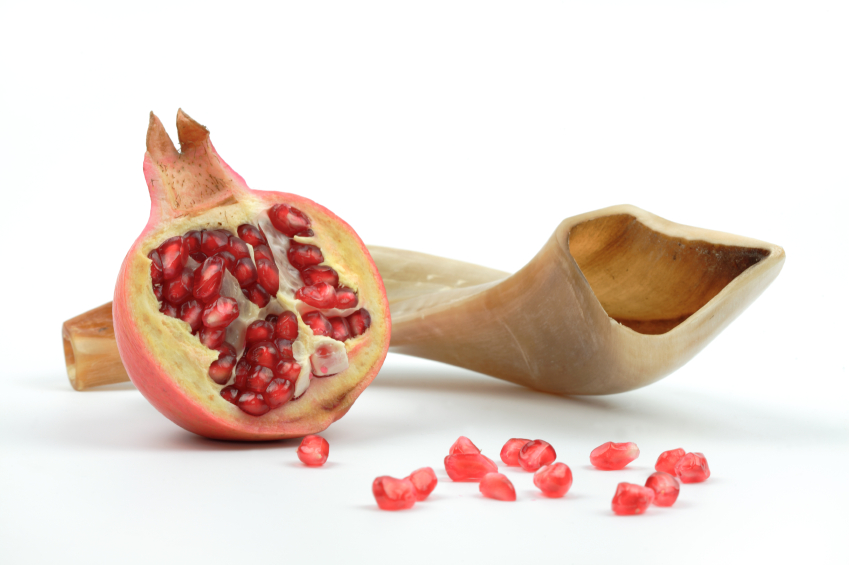
Rosh Hashanah celebrates the anniversary of the creation of the world and begins a period known as the Aseres Y’mai Teshuva – the Ten Days of Return/Repentance. Celebrated on the 1st and 2nd days of the Hebrew month of Tishrei, it is one of four new years in the Jewish calendar, the others being: 15 Shevat – the new year for trees, 1 Nissan – the beginning of the Jewish year for establishing holidays, and 1 Elul – new year for tithing animals.
The previous month, Elul, is spent examining your behavior, making an accounting of the things you did right and wrong and relationships that have been damaged as a result. For those you have mistreated, it is an opportunity to make amends: apologize sincerely and commit to not repeating the misdeed.
Most of the two-day celebration, which begins at sundown the evening before and continues until the appearance of three stars on the evening of the 2nd, is spent praying and enjoying festive meals with family and friends. Two special services are: the shofar service, during which a ram's horn is sounded 100 times in various notes to evoke the feelings of the day; and Tashlich, at which special prayers are said while casting pieces of bread on a natural body of water, like the ocean, symbolically ridding yourself of your sins.
Rosh Hashanah prayers ask G-d to perfect the world, bring unity and harmony among people, destroy evil and establish justice and righteousness. To that end, ask yourself:
- Can I be a better person during the coming year?
- Can I imagine myself as someone who acts with kindness and justice as my motives?
- Can I be part of tikkun olam – repair of the world?
Rosh Hashanah helps you to expand your horizons and dream of great things. You answer that most crucial question – what am I living for: another year of drudgery or one when my spirits soar?
If you believe you can positively change the world you are unlikely to wallow in mediocrity. If you desire a world where everyone lives together harmoniously you must act in such a way so as to bring harmony between people. If you believe justice should rule human endeavor this should impel you to be just.
Preparation
The key to a successful Rosh Hashanah celebration is preparation. Can you imagine having to ad lib an extremely important presentation for work? While some people are excellent extemporaneous speakers, most would do a terrible job. Even if you talk off the cuff quite well, without detailing the presentation in advance the chance that an important point will be left out increases significantly.
So you would spend a great deal of time preparing what you are going to say including the wording and order of making your points. You might create some visual aides. Time would be devoted to deciding how you would dress and perhaps even what is the optimal food for the meal before you make the presentation so you will be at peak performance.
The Ten Days of Return/Repentance, which include Rosh Hashanah and Yom Kippur, are no less than the most important presentation you make each year. During this time G-d will decide whether to inscribe you in the Book of Life for another year. With such life or death stakes does it not make sense to prepare?
You may find it difficult to speak to G-d. What is there to say? G-d knows what is in your heart. Yet you have learned through your relationships with family and friends that even though you know what someone wants to say it is crucial that you let him express his feelings and/or clear his conscience. That act on his part is the first step toward clearing the air and re-establishing a relationship. G-d knows that you need to do the same thing during the High Holidays.
Rather than having to face a blank sheet of paper, the Rosh Hashanah prayer book, known as machtzor, gives you a starting place. In it you will find the wisdom of millennia as a means to express your deepest thoughts, your fondest hopes, and your most fervent prayers.
Rosh Hashanah Resolutions
Just like you need to have professional and physical fitness goals, Rosh Hashanah is the time to make spiritual goals. Do you treat your spouse the way you ought to? Are you committed to raising your children in a deeply loving way or do you indulge them too often causing you to feel good but facilitating their adopting bad habits? Have you a set time for study, even if it is only for 15 minutes a day? What about learning loshon hakodesh, the Holy Tongue of Hebrew, so that you can better understand the Bible? It is tempting to think that because the ancient texts of Judaism are so long and complex or Hebrew is so different from your native language that since you cannot master them you might as well not start.
The story of my namesake, Rabbi Akiva ben Josef, may help you to see things in a different light. For the first four decades of his life he was a humble shepherd. The Talmud refers to him as an am ha’aretz, an ignoramus. Akiva reveled in his rejection of Judaism. He could not distinguish an alef from a beis, an A from a B. Then, perhaps at the urging of his wife, he changed his mind and despite having a large family to support he decided to study. In time he became one of the leading lights of his generation and is among the greatest people of all time. You are all familiar with the axiom that the longest journey starts with but a single step. Nowhere is this more true than in Talmud Torah, the study of Torah.
Among the 613 mitzvahs, the principles or commandment by which G-d asks us to live our lives, there is one you are not doing and can embrace, thereby giving greater meaning and purpose to your life and the lives of those you love. If you sometimes give tzedakah, charity, can you make it a regular practice? Can you designate a percentage of your income for it? If you went out for dinner two times less per month would the quality of your life diminish? On the other hand, how much better would be the life of an orphan who has no almost nothing or a family that struggles to afford challah for the Sabbath?
There is a mitzvah to write a Torah. While it might be a tremendous accomplishment to become a sofer, a scribe, most of us will not do so. Can you commission a sofer to write a Torah in your name and donate it to a synagogue? Or perhaps get together with friends and raise the money to do so?
What if you decided this year you will buy a beautiful lulav and esrog, and fulfill the Succos mitvah of taking the arba minim, the four species? Maybe you can read a book about this amazing practice so as to understand it better before you do it.
Pre-reading the prayer liturgy for Rosh Hashanah will give you some ideas. Pay special attention to the Avinu Malkeinu prayer. What skills and changes to your character do you have to make in order to realize the blessing you pray for in its moving words?
When each day dawns you have another opportunity to change your life for the better. Where will tomorrow’s first rays of sun find you?
L’shana tova tikateivu v’teichateimu l’altar, l’chayim tovim u’l’shalom – May you be inscribed and sealed for a good year, immediately, for a good life and for peace.
What questions or comments do you have about Rosh Hashanah? Please comment below.
